 El Nido Island Hopping Tour
If Weather Cancels Your El Nido Island Hopping Tour
Last reviewed September 2026
An El Nido tour cancelled, bad weather being the usual reason, is a refund and a lost morning, not a lost holiday. Boats leave the town beach only on a Coast Guard clearance issued each morning, usually between 9:00 and 9:30, and the call is made on wind, waves, visibility and official advisories rather than on rain. More often than a full cancellation, a route is reordered or a stop is swapped for a sheltered one. This page sets out who decides, what each listing refunds, how the risk moves through the year and what fills the day when the bay is closed. The routes themselves are compared across the four Bacuit Bay boat itineraries.
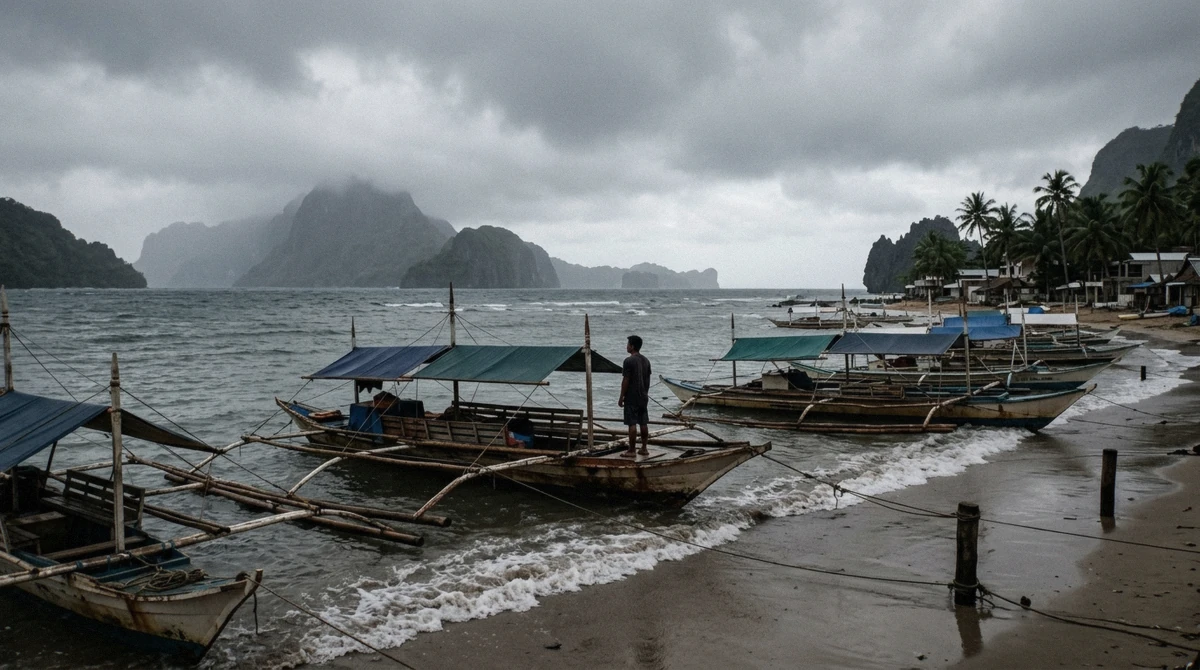
Quick answer Who cancels, what comes back, and how to lose nothing
Every listing compared here cancels free up to 24 hours before departure, and a departure cancelled by weather is refunded. The Coast Guard clears the fleet each morning around 9:00, and a route is more often reordered than scrapped. Tour C goes first because it crosses open water; Tour A and Tour D sit in sheltered lee.
Key takeaways
- Rain alone rarely stops a boat, wind and swell do, and the call comes on the morning
- Tour C across the strait is closed first; the lagoon routes hold longest
- Cancelled by the operator means a refund; cancelling yourself inside 24 hours does not
- The ₱400 eco fee receipt stays valid 10 days, so a lost day costs the tour price only
- Book your first full morning, not your last, and the route worth that slot is the one you most want
Why El Nido Boats Get Stopped
Bacuit Bay is sheltered on its town side and open on its western edge, so a single weather system does not affect all four routes equally. What stops a bangka is rarely the thing tourists watch out of the window.
Wind and swell, not rain
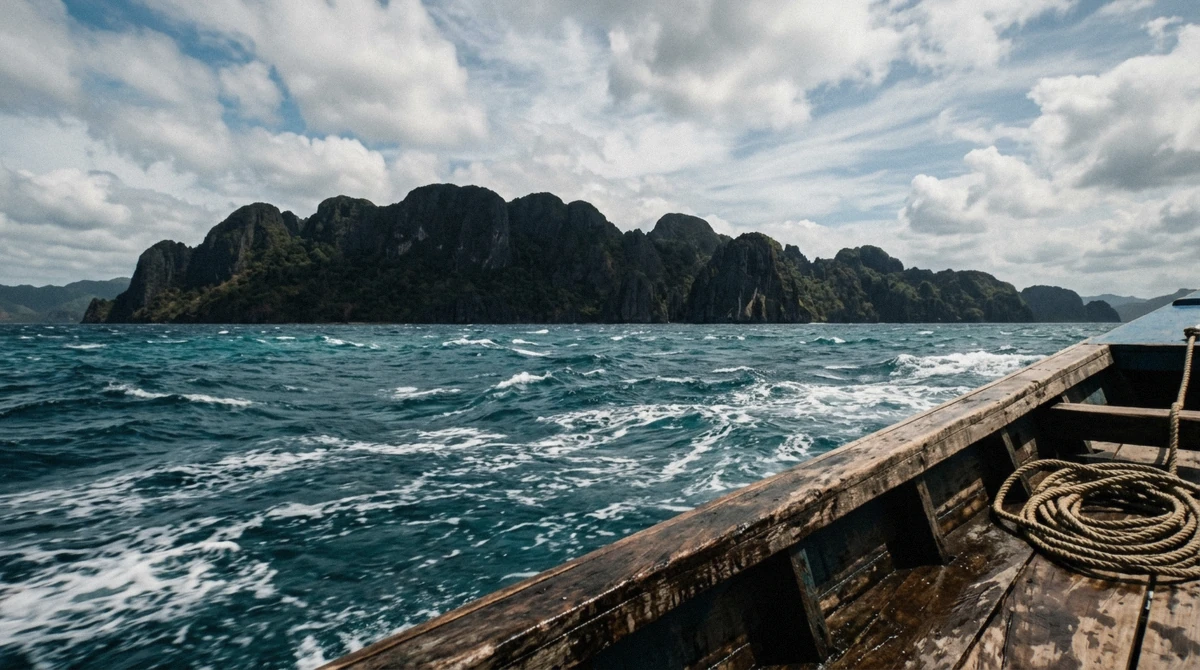
Outrigger bangkas are stable and shallow-drafted, and they handle a downpour without much trouble. What they do not handle is a beam sea. The variables that decide the morning are wind strength, wave height, visibility and any advisory in force, and rain enters the decision only when it takes the visibility with it.
This is why a tour can sail under grey cloud and be cancelled on a bright morning with a hard northeasterly running. It also explains the most common complaint about the system, which is that it looks arbitrary from a hotel balcony. It is not: the swell that matters is out past the headland, where the boat has to cross, and you cannot see it from town.
Which routes feel it first
Tour C crosses the open Tapiutan Strait to reach Helicopter Island, Hidden Beach, Secret Beach and Matinloc, which puts it in exposed water for the longest stretch of any route. It is closed first and reopens last.
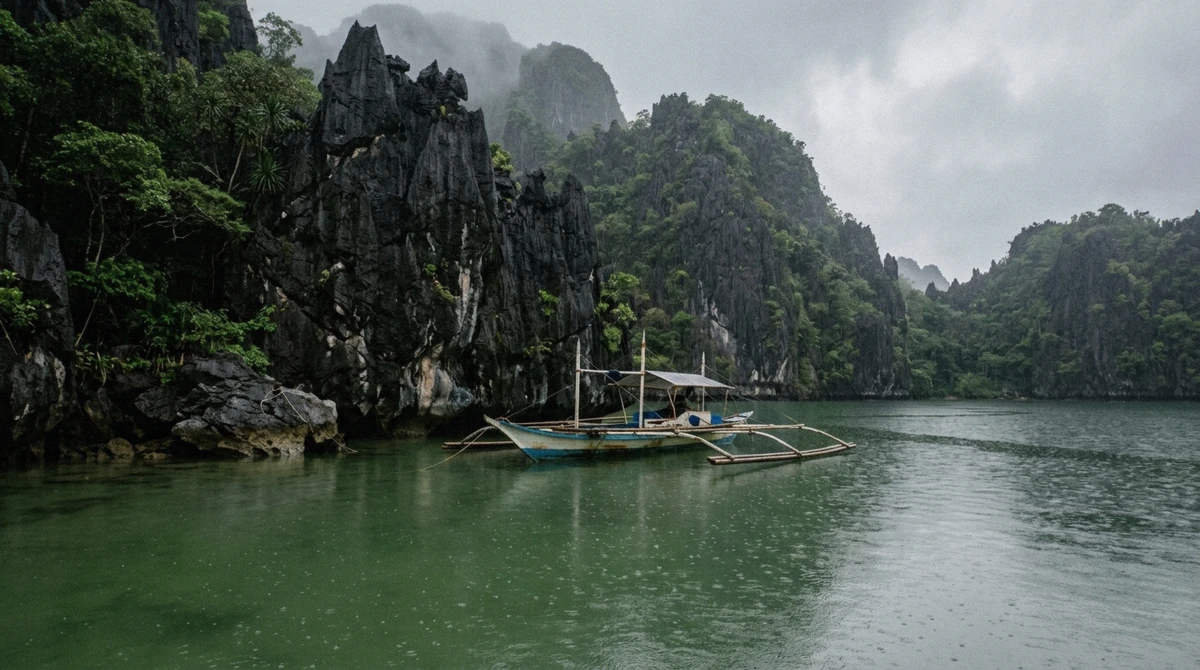
Tour A and Tour D sit in the lee of Miniloc and Cadlao, which is why the lagoons stay accessible on days when the western islands are off. Tour B runs to Snake Island, Pinagbuyutan and the caves, part sheltered, and lands in the middle. If you have one weather-risky morning and one route you badly want, the ranking is worth knowing before you book, and the direct comparison of Tour A and Tour C covers how else they differ.
Who Makes the Call, and When You Find Out
Nobody at your hotel decides this, and neither does the operator you booked with. The clearance is issued by the Philippine Coast Guard station in El Nido and it applies to the whole fleet.
The morning clearance
Shared boats ask you to report to the operator's office or the meeting point between 8:30 and 9:00 am. Boats are dispatched from the town beach between 9:00 and 9:30 once the clearance is given, which is why crews sometimes have people standing on the sand for half an hour before boarding. That wait is usually paperwork and loading rather than doubt about the weather.
When conditions are marginal the decision can come late, and it can come in pieces: sail but skip the farthest stop, sail but run the route in reverse, or hold the fleet for an hour and see. Operators pass the call on as soon as they have it, so a message the evening before is possible when a system is already forecast, and a call at 8:00 am is more typical.
What the operator does next
The practical outcome is one of three. The route runs with a changed order or a substituted stop, which is by far the most common and needs nothing from you. The route is swapped for a sheltered one, and you sail on a different itinerary the same day. Or the day is cancelled, and the booking is refunded through the platform you booked on.
Both of the middle cases are real. One traveller on a private Tour C was moved to Tour D by the Coast Guard on the day itself, and another booked on Tour D was switched to Tour A the day before. In each case the boat sailed and the money stayed put; what changed was which islands they saw. If the swap matters to you, say so when the operator calls, because a refund is the alternative they can offer.
Refunds and Rebooking: What the Listings Promise
The cancellation terms are the same across every listing compared on this site, which makes the rules easy to hold in your head.
The terms in plain words
Every listing here cancels free up to 24 hours before the start time, and a departure the operator cancels is refunded in full. The refund runs through the booking platform rather than through the crew, so the message you get from the operator is a notification, not the transaction. Refunds take a few days to appear on a card.
Inside 24 hours the free window has closed, and a cancellation you initiate is not refundable even if the forecast looks bad. This is the trap: seeing weather on the app at 6:00 pm the night before and pulling out yourself converts an operator problem into your loss. Wait. If the sea is genuinely unworkable, the operator cancels and the refund is automatic. If it is workable, you sail and get a day the forecast said you would not.
What a lost day actually costs
Less than people assume, because the biggest fixed cost follows you rather than the booking. The ₱400 (about $6.40) Eco-Tourism Development Fee is paid once, and the receipt stays valid for 10 days across every tour and site in El Nido, so a cancelled morning does not burn it. Keep the receipt: crews check it out in the bay.
The ₱200 lagoon users fee is only collected on arrival at the lagoon, so a boat that never sails never charges it. The tour fare comes back through the platform. What you lose is the morning, and possibly a kayak booking if you had arranged one privately. The full cash breakdown by route sits in the cost of an El Nido boat day.
Scenario by Scenario
Seven things can happen between booking and boarding, and the right response differs for each. The last column is the one to act on, and only two of the seven require you to do anything at all.
What happens and what to do
The table covers the outcomes travellers actually report on these routes, from a message the night before to standing on the beach with a crew who are still waiting on the clearance. Read the middle column for the mechanics and the last for your move.
| Scenario | What happens | Your move |
|---|---|---|
| Cancelled the evening before | Operator messages you; the platform refunds the fare in full | Rebook for a later morning if you have one spare, otherwise take the refund and plan a land day |
| Cancelled at the beach | Clearance withheld; the fleet stays in and the booking is refunded | Ask the operator whether a sheltered route is still going before you leave the sand |
| Route reordered mid-day | The crew runs the stops in a different order or drops the most exposed one | Nothing. This is normal and the day still covers the route |
| Moved to another route | You sail, on a different itinerary, at the same price | Accept it or ask for the refund instead; both happen and the choice is yours |
| Rain but the boat sails | Conditions are workable; wind and swell decide, not rainfall | Go. Pack a dry bag and a rash guard, and the lagoons look the same wet |
| You cancel inside 24 hours | The free window has closed and the fare is not refunded | Do not pre-empt the operator. Wait for their call, which comes with a refund attached |
| No-show | Treated as a late cancellation, with no refund | Message the operator the moment plans change; earlier is always cheaper |
How Often It Happens, Month by Month
Nobody publishes a cancellation rate for El Nido and any number you see quoted is invented, so the table below ranks risk in words rather than percentages, built on the season pattern the operators work to.
The year in order of risk
The dry season runs from late November to May, with December to April the settled peak. The southwest monsoon runs June to October and is when swapped routes and cancelled mornings cluster. Use the last column to decide how many spare mornings your trip needs.
| Months | Conditions | Cancellation risk | How many spare mornings |
|---|---|---|---|
| December to April | Dry season peak, lightest winds, the busiest months in town | Low | None needed, though the Big Lagoon fills early |
| May | End of the dry season, hot, with the first build-up storms | Low to moderate | One, if Tour C is the route you want |
| June to August | Southwest monsoon, westerly wind onto the outer islands | Moderate to high | One, and book the sheltered routes first |
| September and October | Monsoon peak, the wettest stretch and the most advisories | Highest | Two, and treat any boat day as a bonus |
| Late November | Wind swinging back to the northeast, seas settling | Moderate | One, with the lagoon routes as the safe pick |
Reading the risk against your route
Risk is not evenly spread across the four routes in any month. In the monsoon the strait crossing is the first thing to go, so a September trip built around Tour C is a trip built around a coin toss, while the same week on Tour A or Tour D is likely to sail. In the dry season the constraint flips from weather to capacity, and the thing that changes your itinerary is the Big Lagoon entry limit rather than the sea.
That is worth saying plainly, because the two get confused. A boat that skips the Big Lagoon in February has almost certainly run out of entry slots rather than run into weather, and the difference between the two lagoons explains what you get instead.
Booking So a Cancelled Day Costs You Nothing
Weather risk is managed at the booking stage, and it costs nothing to manage well. Three habits cover almost all of it.
Put the boat early in the trip
Book the boat for your first full morning, not your last. A cancelled first morning leaves the rest of the stay to try again; a cancelled last morning leaves a refund and a flight. This one choice does more than every other precaution combined, and it costs nothing.
Keep a second morning free behind it if the trip is in the monsoon months. Two attempts turn a coin toss into a strong probability, and a spare morning that stays unused is a beach day, not a wasted one. If you are staying three nights or fewer, that spare morning is the argument for booking online in advance rather than walking the operator strip on arrival: the seat is held, and cancelling it costs nothing until 24 hours before.
Pick the route the weather allows
In marginal weeks, book a sheltered route first and keep the exposed one as the upgrade. Tour A and Tour D sail on days that stop Tour C, so a monsoon trip that leads with the lagoons banks a day early and can add the strait later if the forecast softens.
The other lever is the boat. A private boat can leave earlier and can change its own route order within the clearance it has, so a marginal morning is more likely to produce something. The catalogue's private options run from a private Tour A boat to a private A and C highlights day, and the trade-offs against a shared seat are laid out in the private against shared comparison.
What to Do Instead When the Bay Is Closed
A closed bay does not close El Nido. The land side runs on a different set of rules and stays open when the boats do not.
The land day
The road beaches are the obvious fallback and none of them needs a clearance. Las Cabanas and Corong-Corong are tricycle rides from town, Nacpan is about 45 minutes north by motorbike taxi or scooter, and the water on that coast is often swimmable on a day the outer bay is not. Kayak rental on the open beaches costs less than the lagoon kayaks do, and the land-side day is priced in full here.
In town, the Taraw viewpoints, the market and the strip of operator offices fill an afternoon, and walking that strip is the fastest way to learn what tomorrow's fleet is planning. Ask two or three offices, not one, and you will get the same answer twice when the picture is clear.
Rebooking without losing the day
If the operator cancels, take the refund and rebook the moment you have a new morning in mind rather than waiting to see the forecast. Seats on the cheaper shared boats go first in the dry season, and a refund sitting unused while you deliberate is how people end up leaving without a boat day at all.
When the reopening morning comes, expect the fleet to be larger than usual: everyone who lost a day is out on the same water. That is the one argument for taking a quieter route on a reopening day, and the quietest of the four is Tour D, whose lagoons and coves sit closest to town.
What to Do With the Forecast You Have
If You are travelling June to October
Book a lagoon route first and keep a second morning free. Tour A and Tour D sail on days the strait is closed
If The operator cancels the night before
Take the refund, rebook for the next free morning, and spend the day on the road beaches
If The forecast looks bad but nobody has called you
Do not cancel. Inside 24 hours the fare is yours to lose, and the operator's cancellation refunds it
If You are offered a different route on the day
Take it if the stops interest you. Otherwise ask for the refund, which is the alternative on offer
If You have one morning and want the best odds
A sheltered route on a private boat, which can shift its own start time. Compare the private options
Weather and Cancellation Questions
What happens if an El Nido island hopping tour is cancelled for weather?
The operator notifies you, usually the evening before or early on the morning, and the platform refunds the fare in full. Nothing is collected on a boat that does not sail, so the lagoon fee is not charged either. Your eco fee receipt stays valid, so rebooking for another morning costs only the new fare, and the sheltered routes are the ones most likely to be running.
Who decides whether the boats sail in El Nido?
The Philippine Coast Guard station in El Nido, which issues a clearance each morning for the whole fleet. Operators cannot sail without it and cannot overrule it. Boats leave the town beach between 9:00 and 9:30 once it is given, which is why crews sometimes hold passengers on the sand for a while before boarding.
Does rain cancel island hopping in El Nido?
On its own, rarely. Wind strength, wave height, visibility and any official advisory decide the clearance, and a wet but calm morning usually sails. Bring a dry bag for electronics and a rash guard, since you will be wet from swimming regardless. Heavy rain matters when it takes visibility down far enough to affect the crossing between islands.
Which route is closed first when the sea gets rough?
Tour C. It crosses the open Tapiutan Strait to reach Helicopter Island, Hidden Beach, Secret Beach and Matinloc Shrine, spending longer in exposed water than any other route. Tour A and Tour D sit in the lee of Miniloc and Cadlao and hold up longest, with Tour B in between. The Tour C boat compared here is a private one, which gives it more room to shift its timing.
Can you get a refund if the sea is too rough?
Yes, when the operator cancels. Every listing compared here refunds a cancelled departure through the booking platform, and free cancellation runs up to 24 hours before the start time. What is not refunded is a cancellation you make yourself inside that window, which is why pulling out on a forecast rather than waiting for the operator's call is an expensive habit.
When is the worst time of year for cancellations in El Nido?
September and October, at the peak of the southwest monsoon, when advisories and westerly wind are most frequent. June to August carries moderate risk, and the dry season from late November through May is the settled stretch, with December to April the calmest and busiest. In those months the thing that alters an itinerary is usually the Big Lagoon entry limit rather than the weather.
Weather in Bacuit Bay costs you a morning at worst, and only if you let it cost you the fare as well. Book early in the trip, keep a spare morning in the monsoon months, wait for the operator's call rather than pre-empting it, and hold on to the eco fee receipt.
When the clearance comes through, the only question left is which route you are on. All of them sit side by side in the El Nido boat tour catalogue, with the fares, the stops and what each one includes.